

Christmas in Mexico and the Magic of the Pastorelas
In Mexico, Christmas doesn’t arrive it performs.
In Mexico, Christmas unfolds across weeks of lantern-lit nights, Las Posadas, and the beloved pastorelas—lively, comedic Nativity plays where good ultimately triumphs over evil.
A Season That Unfurls Night by Night
In Mexico, Christmas unfurls not in a single day but across a tapestry of evenings charged with lantern light and the scent of cinnamon. By early December, wooden doorways are draped in poinsettias whose crimson petals glow against the dark. Along narrow streets, farolitos—small paper lanterns—flicker like distant stars, guiding families to neighborhood plazas where musicians tune vihuelas and guitars. Children clutch homemade piñatas, their jagged points dipped in bright paint, while nearby vendors ladle steaming cups of ponche—sweet punch brimming with slices of guava, tejocote, and pineapple—into clay mugs.
Here, amid the laughter and chatter, the heartbeat of our Christmas truly begins: Las Posadas.
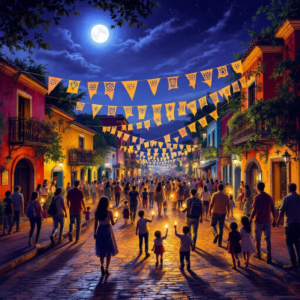
Las Posadas
Each night, groups bearing candles and songbooks thread from home to home, reenacting Mary and Joseph’s search for shelter. At every threshold, singers playing the innkeepers greet them, doors “closed” in mock refusal, voices rising in playful protest.
Finally, a door swings open to reveal a table piled with tamales and atole. In the warmth of that invitation, the company kneels, voices softening into prayer before bursting again into celebration.
And then come the pastorelas, our theatrical crown jewel.
What Are Pastorelas?
No December evening feels complete without them. On makeshift stages in town squares or under tented awnings in city barrios, a troupe assembles: shepherds in woven tunics dusted with hay, their wooden crooks polished smooth by eager hands; devils in tattered scarves and painted masks, their horns curling under the stage lights; angels robed in white gauze, their tinsel wings glinting.
From the first fumbling notes of the shepherds’ chorus to the final peal of bells heralding the birth of Christ, the audience roars with laughter, gasps at every demonic prank, and rises when Archangel Michael descends in a cascade of silver sequins to banish the fiends. The message lands every time: good will prevails.
Roots Older Than Christmas Itself
But this tradition was not born overnight. Long before Spaniards first set foot on these shores, the Mexica filled open courtyards with song, dance, and drama. In Tenochtitlan, priests draped in eagle feathers reenacted epic battles before altars smoking with copal. Drums throbbed like the beating heart of the city; actors’ painted faces tilted skyward as they recited poetry that wove together history, myth, and devotion.
When the Franciscan friars arrived in 1523, they saw in these performances a bridge between worlds. Drawing on European religious theater, they encouraged Indigenous artists to dramatize the Nativity. In villages like Acolman—nestled near the ancient pyramids of Teotihuacan—local singers took up the challenge, adapting the story into Nahuatl and infusing it with familiar rhythms and dances. Around a flickering bonfire, they sang hymns that would become the first Posadas, and staged early pastorelas with devils who snapped wooden jaws and shepherds who stumbled over their own cloaks.
Shepherds, Devils, and Michael
As these dramas spread, the shepherds—the lowly figures of the Gospels—filled with personality. One led with solemn faith, another fumbled with his staff, a third cracked jokes about his own ignorance. Bato, the clownish simpleton, unleashed pun after pun—elders tsked, children howled with delight. Meanwhile, the devils hissed and schemed, setting traps to lure the shepherds astray.
Only when Michael, sword aloft and armor gleaming, roared from the heavens did order return—and the path to Bethlehem reopen.
A Tradition That Refused to Die
Over centuries, pastorelas weathered bans by the Inquisition, disdain from French-obsessed elites, and the drift of urbanization. In the 1800s, rural troupes kept the flame alive, performing under moonlight in courtyards thick with the scent of copal. Then, in 1821, José Joaquín Fernández de Lizardi penned La noche más venturosa, a pastorela so sharp with satirical wit that it helped reignite interest across the young republic.
Pastorelas Today: Familiar Story, Infinite Versions
Today, pastorelas appear in every imaginable form. In some towns, shepherds become factory workers clocking in for the midnight shift; in others, they’re street kids trading jokes and tamales. Political jabs land like sharp chilies—mayoral scandals lampooned, social ills laid bare—yet the ending holds steady: good wins.
At the final bow, the audience spills into the plaza. Lanterns sway overhead, children clutch the last shards of their piñata, and cups of ponche warm cold fingers. For countless Mexican families, no memory shines brighter than that moment—when devilish laughter fades, the heavens part in song, and hope descends in a beam of light, reminding us year after year that on our stage, and in our lives, good can triumph over evil.
